That time we tailored the subscription to customers at Cappelen Damm

Cappelen Damm is Norway's biggest book publisher
Key challenge
- Customers were required to call customer support to help solve even the most basic needs related to book subscriptions.
- For Cappelen Damm, customer support meant higher cost.
- Eroded trust in book subscription services online.
Desired outcome
- Reduced strain on customer service.
- Increased trust and customer satisfaction.
Cappelen Damm went through a digital transformation. Our goal was to modernise their book store, subscription services, and related platforms.
History of book subscriptions
For a long time, book subscriptions and book clubs were cutthroat and customer unfriendly domains: Customers would consistently be lured in with a cheap, often unrelated bait offer (e.g., a blender or a headset). This came at the cost for the customers, as they’d have to stay on for a few months. This also came at a cost for the companies, as they started to attract people who were after free appliances and not books. Customers became adept at getting the free stuff without paying and the companies had to start building guardrails and systems to stop them. Historically, managing your subscriptions plans were done through customer support too, to make it tedious and hard to cancel.
A new start
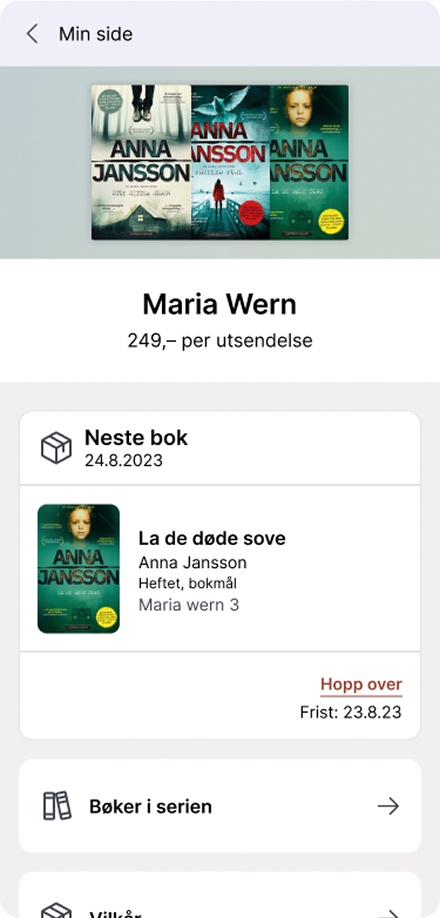
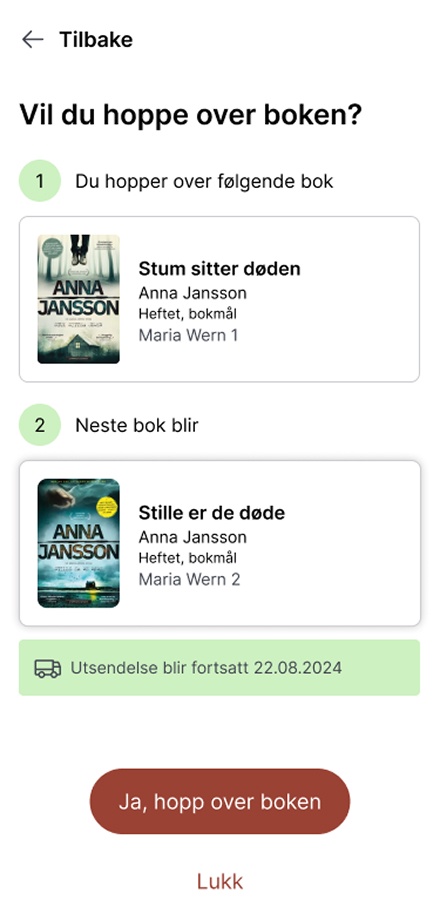
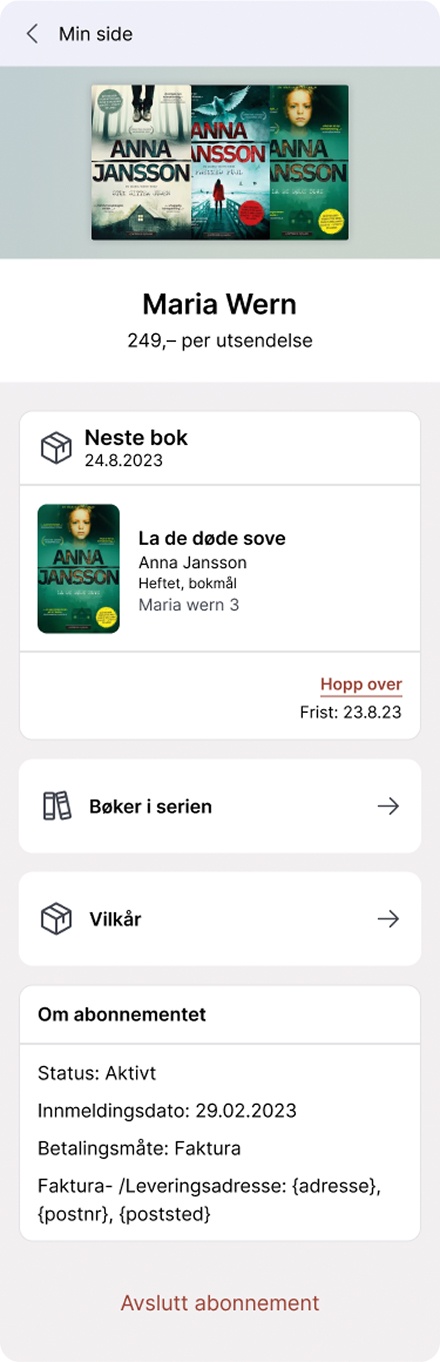
We set out to rebuild trust in these concepts, by being open and flexible about how subscriptions work. One of our core initiatives were through the product pages themselves, but the primary driver was a my page that could support a customer’s full suite of needs related to subscriptions. When subscribing to physical products, there’s significantly more overhead than with digital products: Customers want to know when stuff arrives. They also want to know if they want the next book at all. Sometimes they’ll even want the book sent somewhere else.
Other crucial business goals that drove the development of my page was to divert unsuited customers away from the products, by shifting focus from bait offers and binding agreements. and to create less strain on customer support, by empowering users to perform the most frequent actions themselves.
Consistency in our Execution
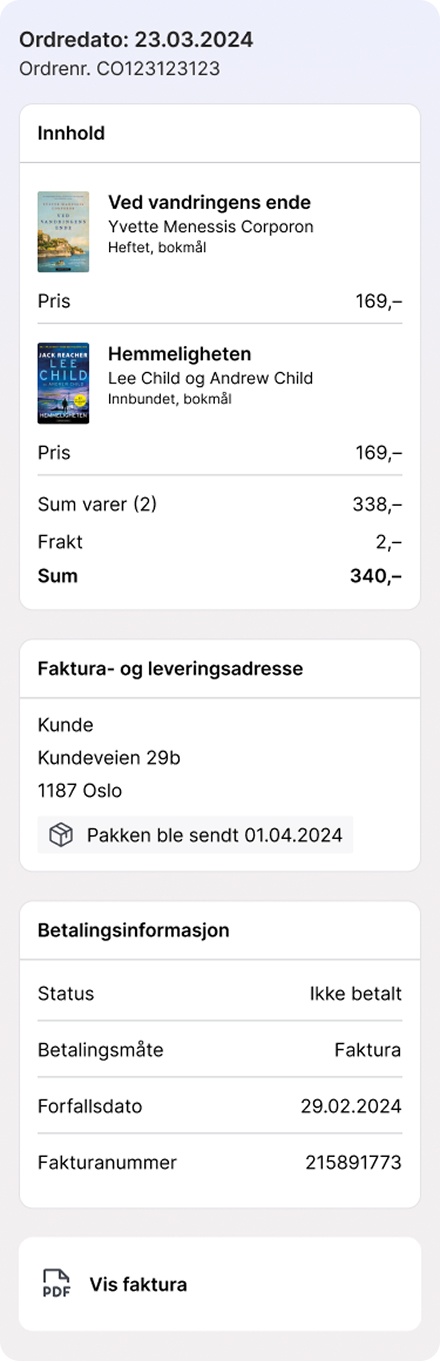
Book subscriptions existed vis-à-vis other book purchases in the store. Book purchases in the traditional sense were still the core business. Reusability and consistency were key. Therefore, we made sure that while accessible through your subscription, the subscription orders were rendered and displayed in the same way as other books purchased on the Cappelen Damm site.
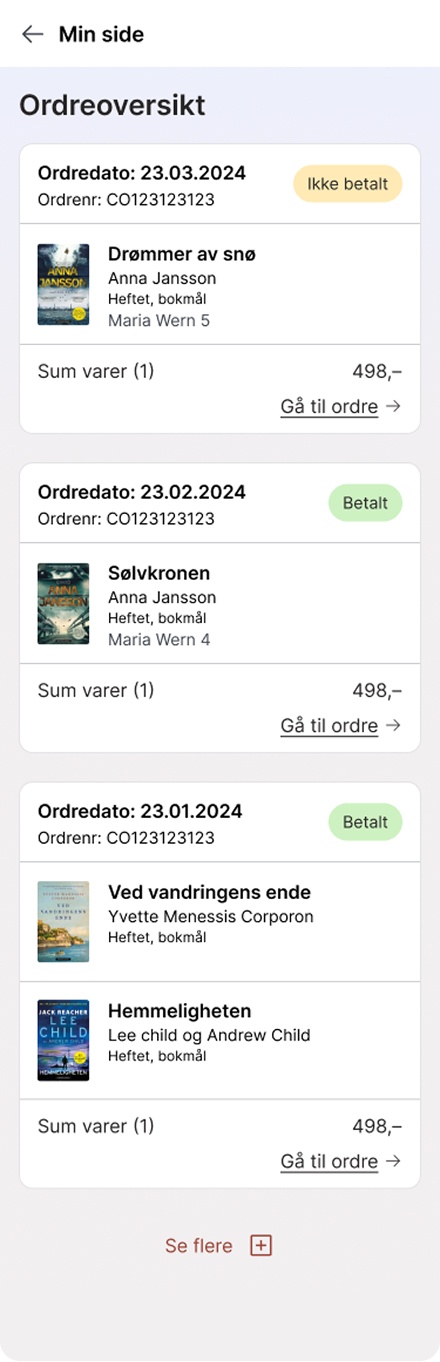
Flexibility and transparency
Through the my page, users could finally perform the top actions through my page. These top actions were identified by seeking quantitative reports from the customer support centre. These top needs were “cancel my subscription”, and “skip book”. Obviously these actions are not beneficial for the business, but in regaining trust in the concepts, we were required to go in this direction. Our core hypothesis was that more transparency and flexibility will create safety and thus more sales in the end.