That time we streamlined learning procurement at Novo Nordisk with an agentic learning solution
Novo Nordisk is a leading global healthcare company
Key challenges
- Cumbersome and opaque procurement process involving externals and ill equipped internals.
- Legacy systems provide no insight or traceability of procurement processes.
Desired outcomes
- Higher employee satisfaction in procurement process.
- Less reliance on external brokers.
- Reuse material for better pricing.
Novo Nordisk's goal was to: Save money and time by streamlining learning procurement and formalising the reuse of learning material.
The cumbersome process
In a large organisation like Novo Nordisk, there are processes for almost everything. This also applies to procurement of initiatives meant to raise competence. Examples include workshops, talks, and off-sites. Novo Nordisk outsources vast sums on learning activities each year. The processes to get there resemble cumbersome tender processes. The tender process itself goes through an external broker too, which adds complexity. It is difficult for employees to navigate this domain, as it’s not a part of their daily operations. Responsibility is often left up to managers without sufficient know-how. This leads to them choosing the wrong products and suppliers. Many are left dissatisfied. Systems behind the process offer little traceability and few learnings are stored once a process has ended.
To reach these goals, we needed a better understanding of the systems and processes used on the broker side and on the Novo Nordisk side. It also required a careful understanding of the motivations and experiences of the employees and the external brokers. This information was enriched along the way.
User segmentation
Once we started to look into the systems, we discovered that there was an enormous difference between the request scopes. This made us think that the user groups were also vastly different. For example, a workshop could cost a few thousand, while a full-day professional development event could cost several times that. Some managers would do it all by themselves, while others would have assistants to help. It quickly became a combination of change management and producing products that yield results for employees. We were not necessarily only competing with internal tools, but also with custom processes created by employees.
Example of user segmentation by spend
User involvement for adoption and marketing
In response to a wide array of divergent needs and user segments, we hypothesised that user testing and user involvement would drive not only better results for the interface, but also create higher adoption. By showing and offering to have key users test our product, we were also driving adoption and word of mouth.
Design and interaction
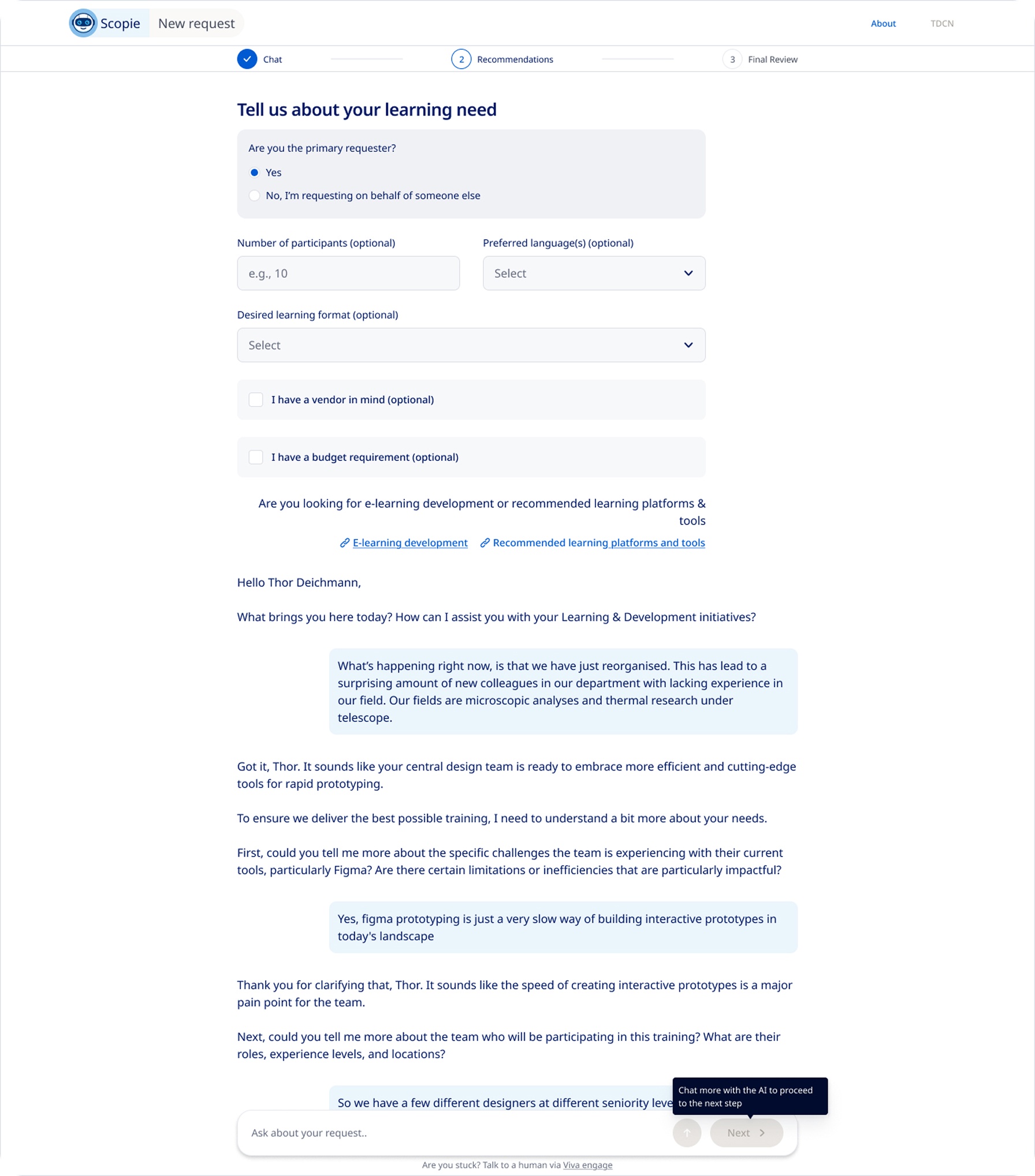
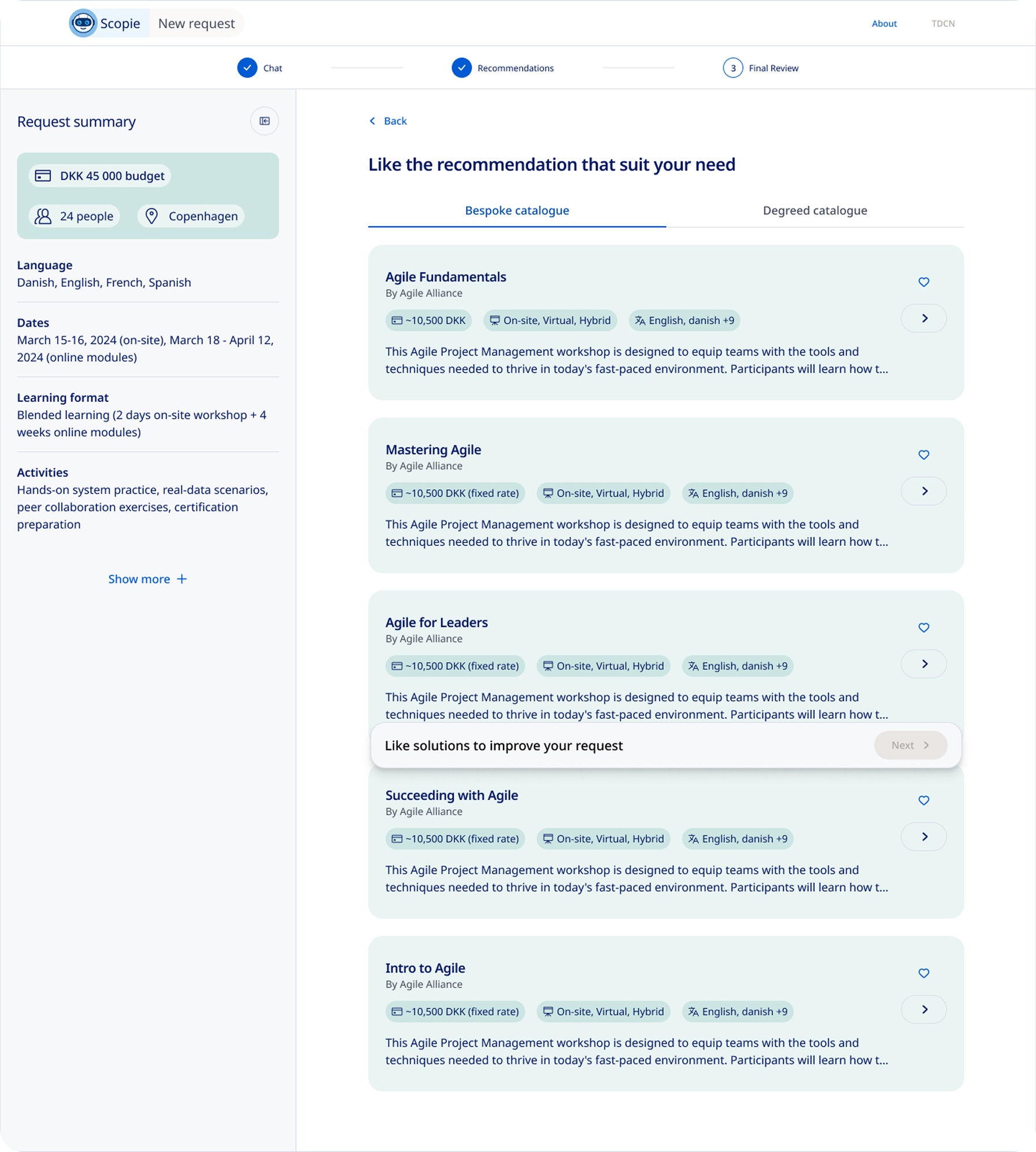
At the time, there were few established AI systems to look to. ChatGPT and Claude were mostly chat based. Our north star was richer than that: we aimed to create an information gathering system that would also match users with previous cases for speed and reusability.
We tested several different user interfaces throughout the project. In early variants a single AI agent did everything. It ended in less fortunate results where the users were led on a wild goose chase. We also discovered that a chat is an open environment, while we actually wanted users to be led through a funnel. In later variants, we found that the agent acted best with a concrete task. We also found that some information is best gathered the old-fashioned way, via a form rather than in a conversation with AI.
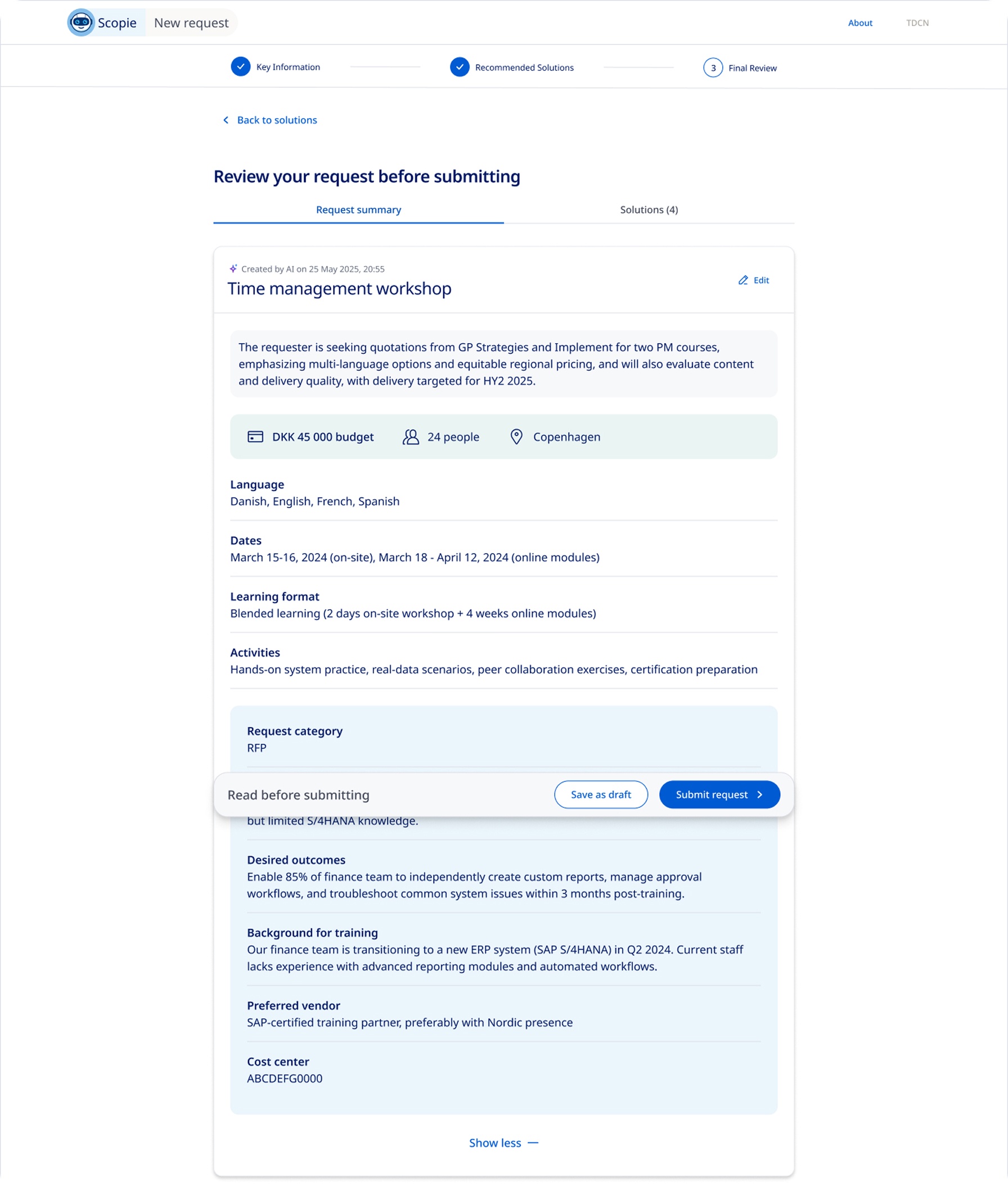
The flow was therefore eventually divided into three steps: a step where the user fills in information together with the AI and with the help of a form; a next step where a separate AI compares the data from the first step against a database of existing agreements; and a final summarising step where the user approves everything.